|
BOB LUDWIG: MASTERING'S MAINE MAN
by Philip De Lancie
MIX, August 1993, Vol. 17, No 8, Tape and Disk.
Reprinted with permission
The art and science of mastering is essentially unknown to the general public and often poorly understood even within the
recording industry. Removed from the spotlight, mastering is definitely not the music business' most likely path to celebrity
status. But there are those mastering engineers who, after years of putting the finishing touches on successful releases, acquire
a high profile among industry insiders and are seen by their clients as an essential ingredient in the production process.
|
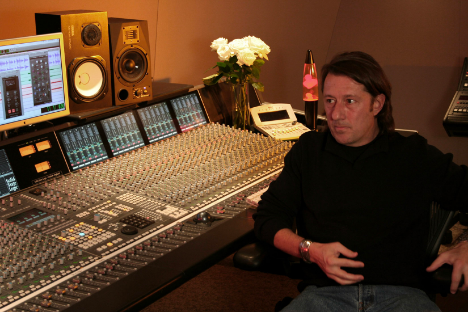
Among these top mastering engineers is Bob Ludwig. Ludwig's work with name artists and producers in New York at Masterdisk
and, prior to that, at Sterling Sound, spans a career of more than two decades. He has recently opened his own facility, Gateway
Mastering Studios. The room is noteworthy not only for the "spare no expense" philosophy with which it has been designed and
equipped, but also for its location: Gateway is in Portland, Maine, far from the inner-urban intensity of Manhattan.
|
It takes a certain amount of self confidence to move hundreds of miles away from one's client base. But in Ludwig's case the gamble has paid off. Reached between sessions at the new facility, Ludwig reported that the studio has been busy "right out of the starting gate." He graciously credits much of the success to others: his partner in the venture, Dan Crewe, maintenance engineer Scott McConville, engineers Thom Rhoads and Brian Lee, and traffic manager Kathleen Wesson.
We began our conversation with a look at Ludwig's approach to the design of the new room.
Tell me your underlying philosophy of what makes an ideal environment for mastering, and how that philosophy has been realized in the main room at Gateway.
Mastering is the stage where there should be no surprises. So my philosophy was to start with as perfect an acoustical situation as we knew how to do, and then figure out how to put the equipment in and the doors and the walls around it.
I believe in using the highest-possible-definition speakers, so that no problem with the tape escapes you. We have Duntech Sovereign 2001 speakers. They are definitely audiophile speakers, but they are very good in mastering. They have a single tweeter; they are time-aligned, and they are professional enough that you aren't blowing up tweeters or drivers every day.
I don't monitor very loud, except for certain periods of time. By loud I mean 90dB SPL. But the Duntechs can withstand that. I haven't heard every speaker in the world, but so far this is the best one that I've heard for mastering. There might be a speaker that would image better, but they certainly wouldn't fill up the room with the same kind of SPL.
The speakers are a four-way system. Duntech employs its own passive crossover system that uses these monstrous coils. The speakers are powered by bridged pairs of Cello Mark II performance amplifiers. One set of amps is the positive pole, and the other is the negative, and the speakers are strapped between the two of them. That effectively doubles the slew rate, and they are capable of putting out 4,000-watt peaks, though I never listen that loud.
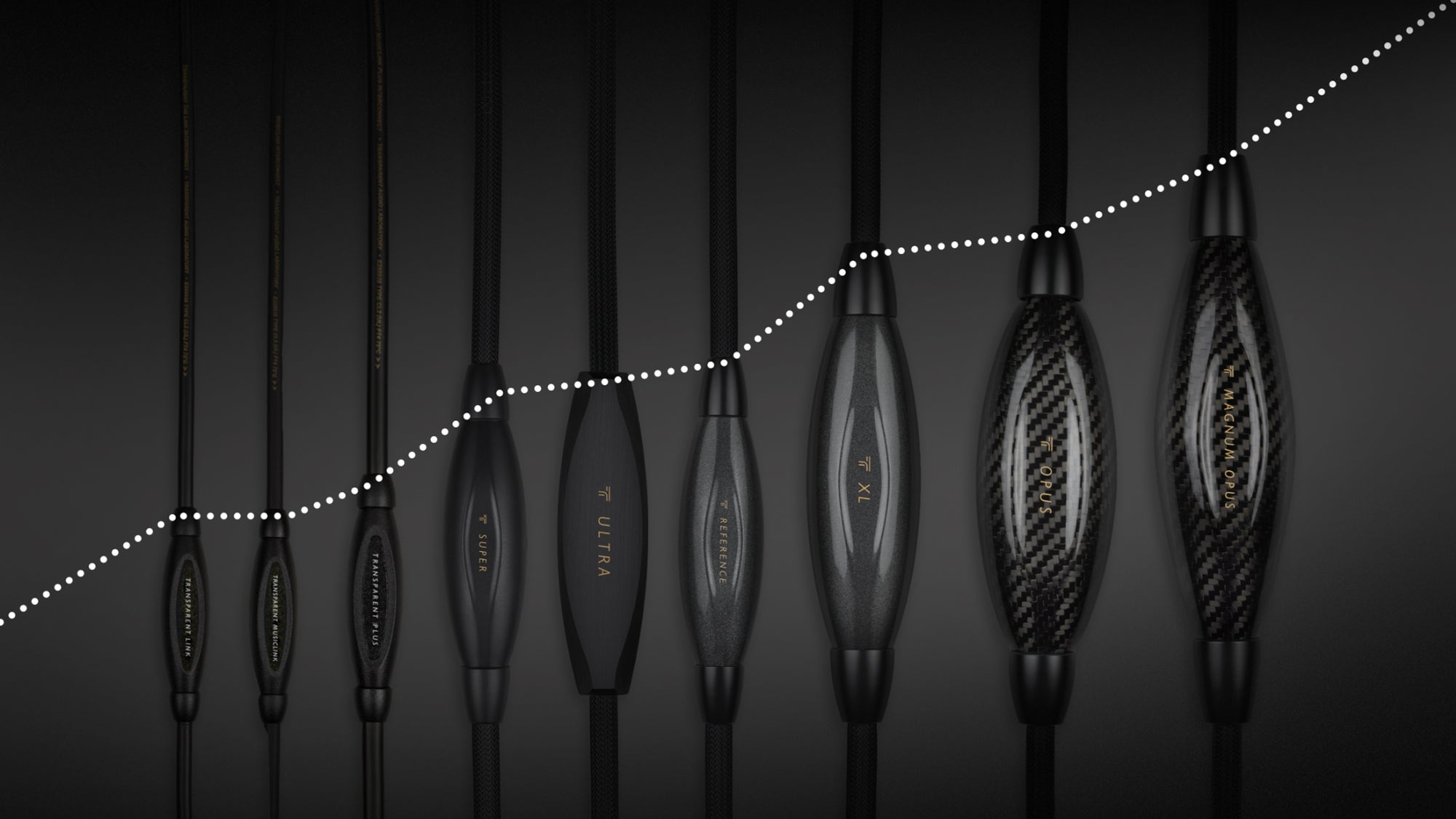
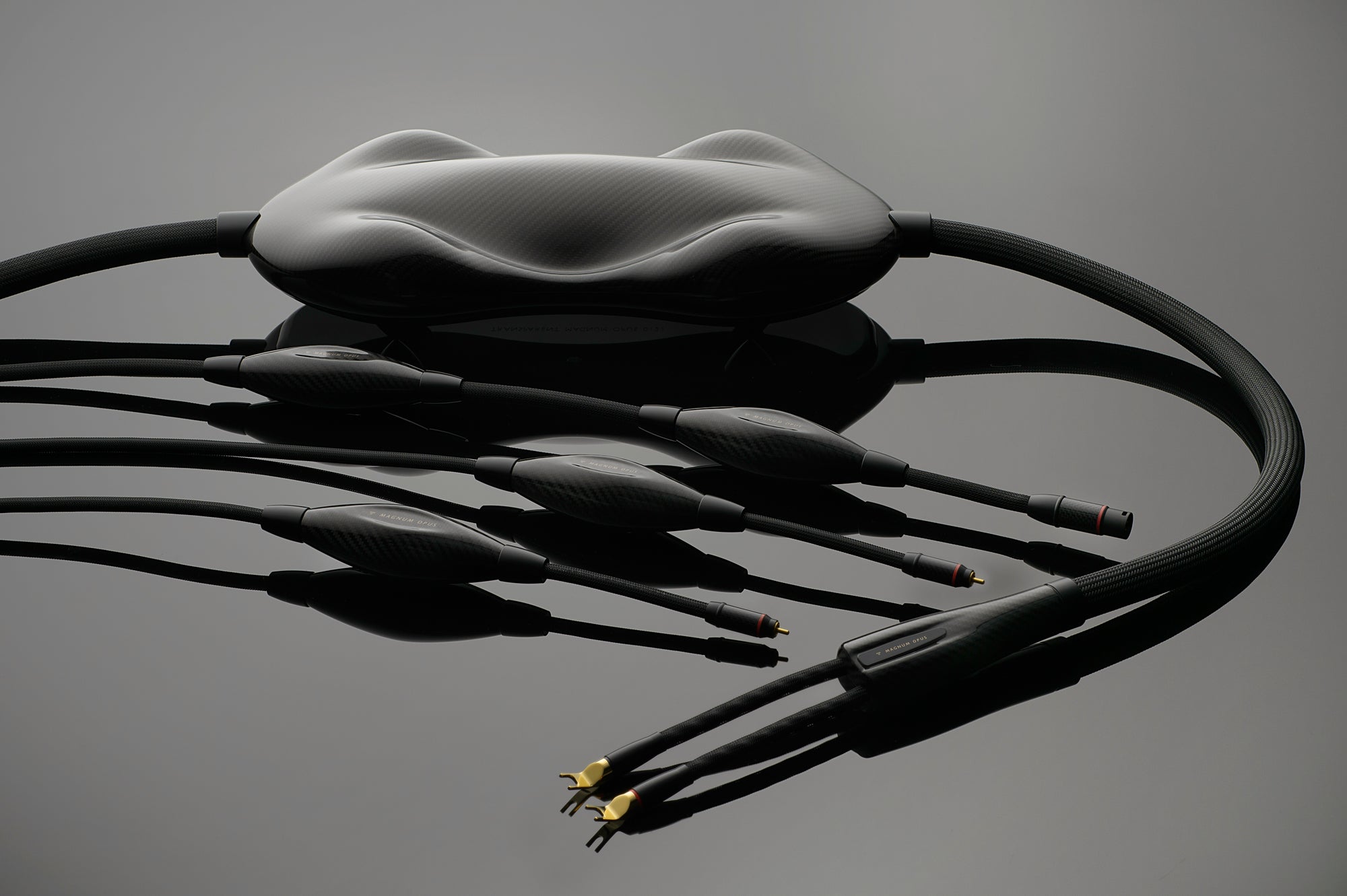
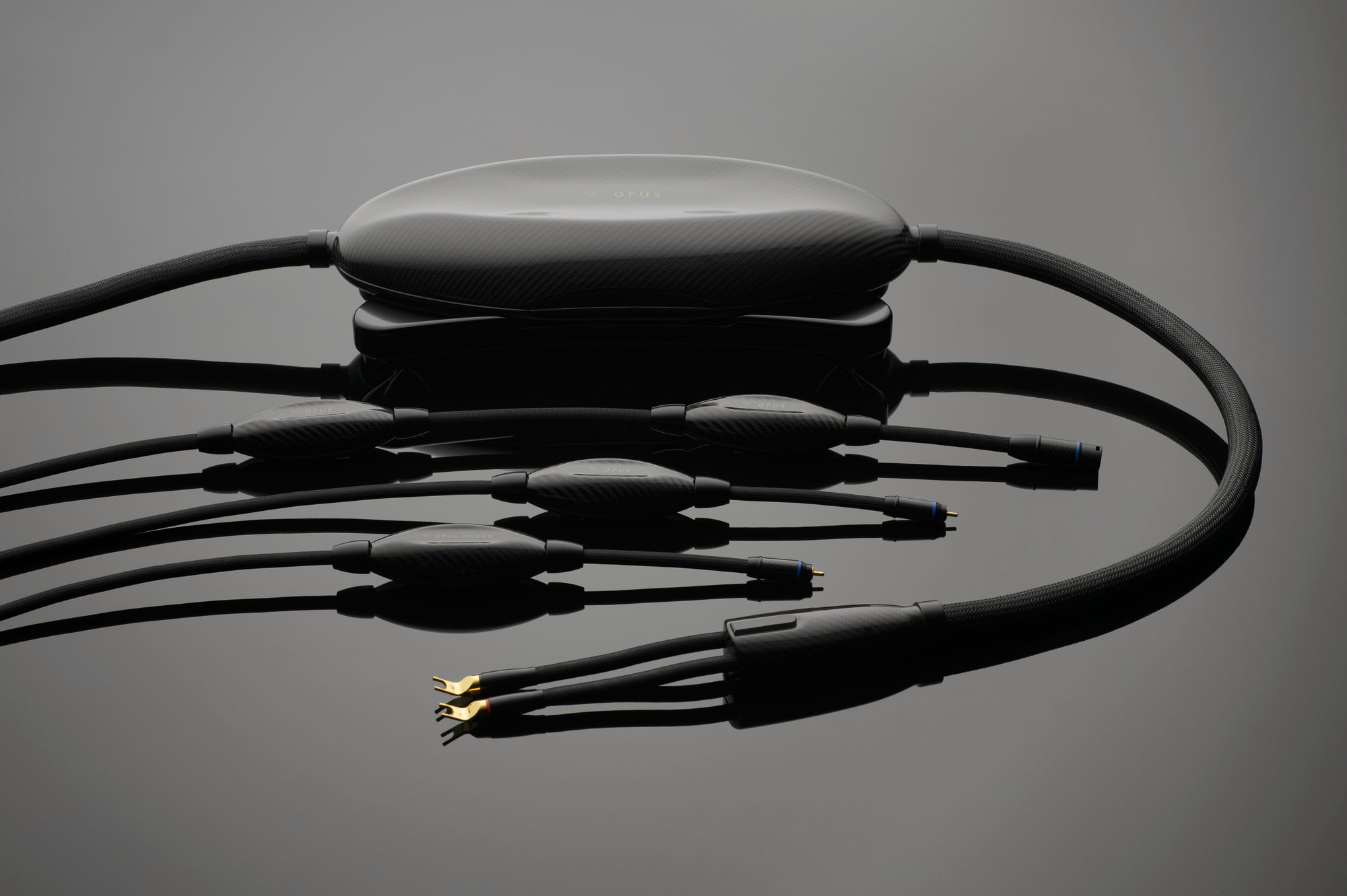
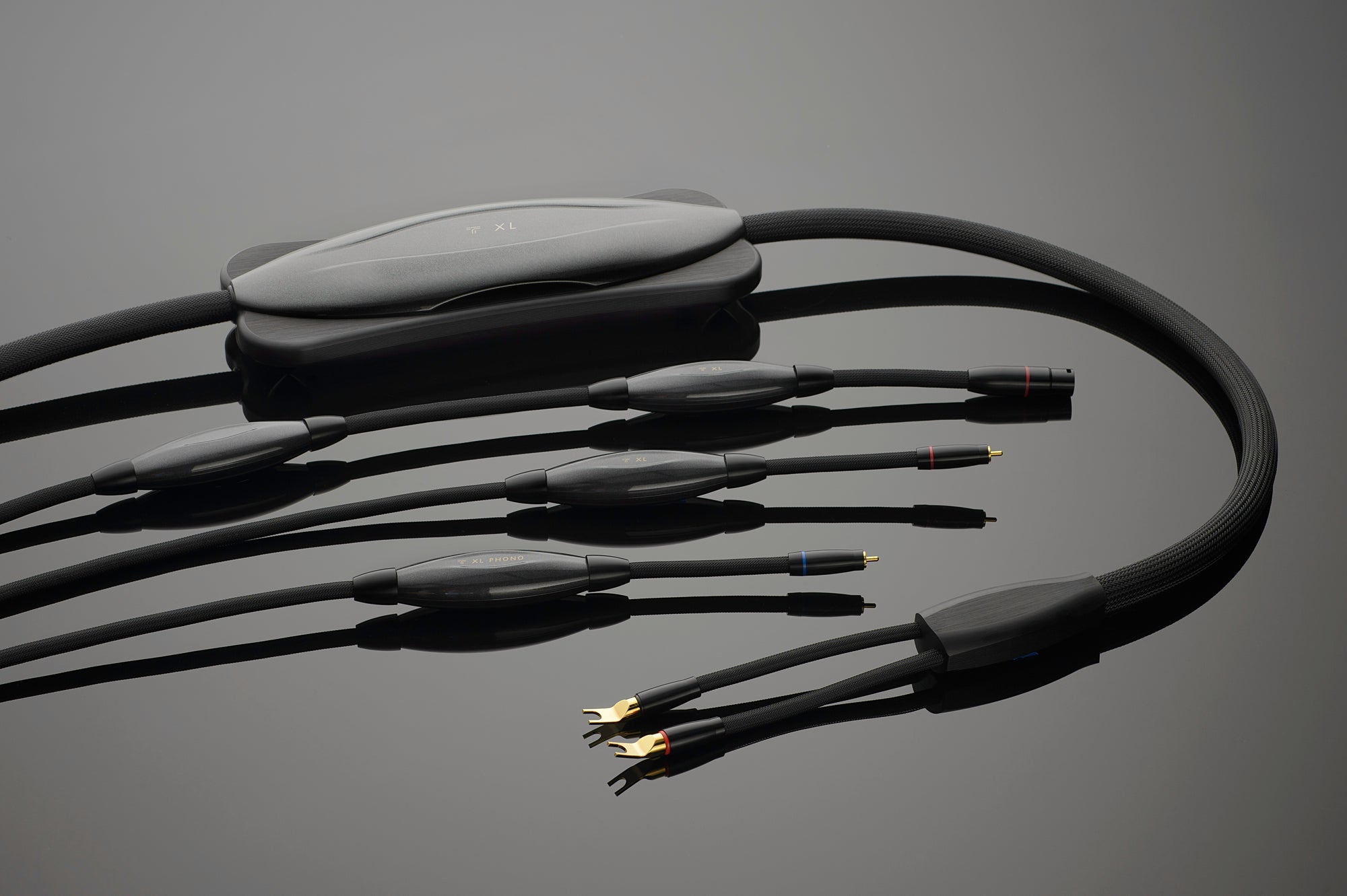
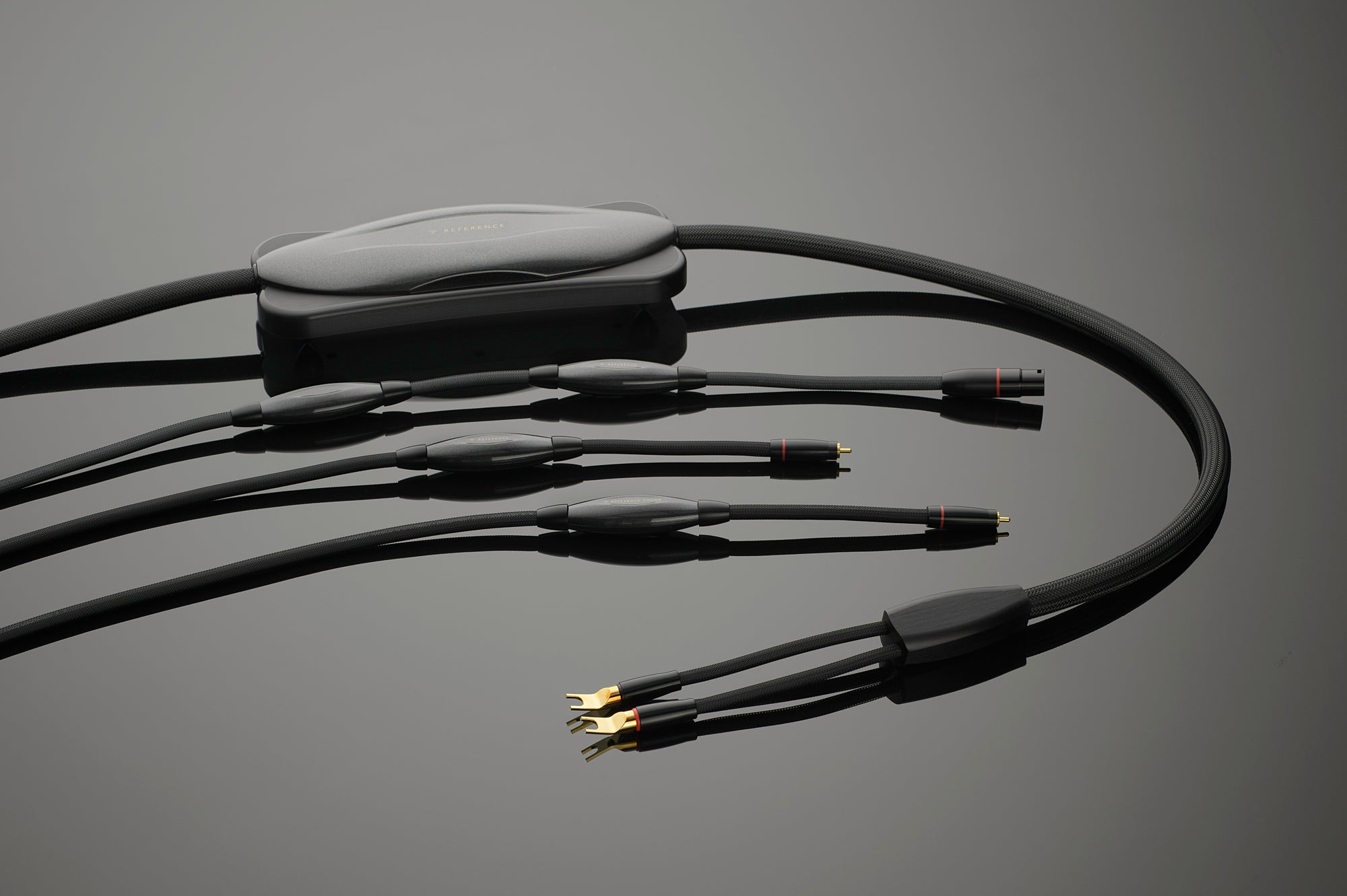
The wiring is made by Transparent Audio. It is a new kind of cable that is considered to be the best you can get; the whole studio is wired with that. There is no question that you can hear the difference. You can also measure the differences in cable bandwidths and capacitance, though it is beyond my understanding why differences in the megaHertz range would translate to an audible difference. But it is not subtle.
When the studio was finished, we had everything wired with Transparent cable except the link between the console and the Cello amps. We got some Transparent cable just to see if changing that link would make any difference. The difference in the solidity of the bass was remarkable. So I get annoyed with those people who refuse to listen just because they haven't yet figured out a way to accurately measure the differences.
At any rate, we have as much of an audiophile setup as I know how to make. And the room is designed around it. The location of the tweeters off the side walls was specified to the inch. The concept for the room was done by Peter D'Antonio of RPG Diffusors and me.
The speakers are not soffit-mounted. They are six-feet-tall and sit on spikes that go into a concrete pedestal that goes down to bedrock. So they are completely isolated from the floating floor of the studio. There is naturally a sweet spot in the room, because there can be only one spot where the time delay between two tweeters can be correct. But when you move around the entire room, the general sound of the speakers is very consistent.
The studio is a room within a room, and the walls use seven to nine layers of sheetrock. Because the walls are very solid, the bass has a very well defined boundary.
The dimensions of the room were based on ratios, developed by an acoustician named Louden, that have to do with how bass builds up in an enclosed space. Certain ratios will yield much less bass buildup. So we started with the most ideal ratios and then, because the Duntechs go down so low, we decided to build a room without standing waves down to 19 cycles, which is why the room is 30 feet-long and 16-feet-high.
The idea that Peter D'Antonio had was somewhat dead end by the speakers and live end in the back. It has carpet and Fiberglas absorption. The Fiberglas is wrapped with RPG Soundtrack, which uses the best technique that is known right now for stretching acoustical fabric over Fiberglas.
The back of the room has the world's first third-generation RPG Diffractal. This is a huge thing that takes up the whole rear wall of the studio and disperses the sound. It uses the same pattern of cavities of varying depths that is used in RPG Diffusors. The pattern appears in the Diffusors themselves, and also is repeated on a macro level in the arrangement of the Diffusors and on a micro level in the surface of the wood strips used in the Diffusors. And the ceiling has another RPG device, Flutterfree, which disperses the first ceiling reflection from the tweeter into the Diffractal.
The studio is set up quite a lot like a control room. All the noisy equipment with fans is isolated from the main room. All the gear that doesn't create any noise is in five rack units behind the consoles. So it's a normal studio look with the speakers, then the console, then the operator, then a huge low-equipment rack, then some space behind that.
Let's look at the equipment you chose for the main room. Was it mostly gear you had used at Masterdisk, or did you make an all-out search for new and different equipment?
As much as possible, I looked to see what was available. And I was shocked that I was going to end up using the Neve digital console again, though the Neve I have is a DTC 1.5, which has a few more features on it. The compression and EQ on the Neve have a unique sound. No one else has a compressor that sounds quite like that.
The automation on the DTC is very simple, but it is very brilliantly designed for mastering. It has snap shot and dynamic automation, and you can preview and modify the snap shots coming up while playing music in the Playback mode. You can use it with a client breathing down your neck and not have the automation become the focus of the session. So I've always felt that mastering automation should at least be able to do what the Neve does, but no one else has ever duplicated that.
We also have a Harmonia Mundi Acoustica BW 102 console. It is a 24-bit version, with 20-bit SDIF ins and outs. Also, the EQ has a newer algorithm and the dithering is more advanced. The unit has the only digital domain de-esser that is of any use, which is totally critical. The Harmonia Mundi has both snapshot and real-time automation combined, so you can do anything you want, except preview and make changes like you can on the Neve.
We have this immense digital patch bay that Scott McConville, my maintenance man, came up with for every digital in and out on every piece of gear. Every patch point has a Canare impedance transformer. It is very flexible, and it just takes a minute to reconfigure the room.
In the analog domain, we have a pretty highly souped-up Neumann mastering console, which I started with because I could get it relatively cheaply instead of having to build one from scratch. It has a combination of Neumann EQs and the latest Sontec mastering EQs, the 430C. And we have both Ampex and Studer tape machines to choose from. The Studer has the Cello class A tape amplifiers available.
So how do you decide which combination of all these consoles to use for a given project?
A lot of tapes that we get in are analog. Generally, if the master comes in on analog, we stay analog until just before going to the PCM-1630. If you are in analog, you have these fantastic equalizers that, to me, still sound better than -- or at least different from -- any of the digital EQs. They have their own sound. And I have an old NTP compressor that I'm very fond of.
Of course, I do what I think sounds best at the moment, which might be the digital console. I'm not adverse to doing something in analog and then at the end putting a little tweak with the Harmonia Mundi. But I feel that the transduction from A/D and D/A is one of the weakest links. So I try to keep the signal in whatever mode it comes in on.
Does that mean that you think the effect of the A/D conversion on the sound depends on its placement in the chain?
Absolutely. Plus, I have a lot of clients that are total digiphobes. They hate digital, and wouldn't dream of having their signal passed through anything digital that they don't have to. I have people that would walk out the door if I started using the digital console.
What are you using for A/D conversion?
I use the Wadia 20-bit that has the Ultra Analog chip in it. And my D/A for monitoring is the latest 20-bit re vision of the Apogee.
Any other notable production gear in the main room?
We have the Sony DAE-3000 editor. We also have a Marantz CD-R recorder, which has the HHB CD-R Indexer. People prefer the CDs to a DAT reference. If we charged the same, probably everyone would take the CD, but we have to charge more for them. And we have the Sony 7000 Series DAT machines with the DAT editor, which is great because you can insert-edit into a pre-existing DAT.
What about your edit room? How is it equipped, and what are you using it for?
We use the edit room for sequencing, editing and any Sonic Solutions work that we need. We have a full-blown Sonic System, including NoNoise and the Sony Start Lab CD-R recorder. So we can write the PreMaster CDs, which are accepted by DADC, Nimbus, Cinram and Americ Disc. We also have another DAE-3000 editor in that room. And we do all the CD production work up there, like cloning PCM-1630s.
Now that you have your own place, designed and built to your specifications, do you find that there has been any effect on the way you work and the results that you get?
Yes. Even with the stuff I did at Masterdisk, I can hear more detail listening here than I did there. People who have worked on a mix for weeks will suddenly hear gates turning off and on that they never thought were audible. We even keep some Yamaha NS-10s around so that people can hear what they thought they had on their tape. But I'm finding that once you get the EQ right on super-high resolution speakers like the Duntechs, it tends to translate onto almost anything. And what I have noticed, compared to my former situation, is that the amount of changes that people ask me to make after listening to their ref is almost nil here. Almost every thing gets approved on first shot.
Have you found that relocating has had any effect on the volume or type of clientele?
We figured that when we moved things would start very slowly and gradually build up. Wrong. It was full blast the first day. We also figured that a lot fewer people would come to sessions here than in New York. But so far, more have come. For big projects, like Bruce Hornsby, Nirvana, David Bowie or Robert Plant, people stay overnight. But for me the average record usually takes between four and eight hours, depending on who engineered it.
Is there anything that the really fine engineers have in common that makes it easier to get optimum results with their recordings? And what, if any thing, do the poorly engineered recordings have in common that makes them more problematic?
Most engineers end up listening on near-field monitors so much now that their tapes have much more distortion in the tracks than you would ever think should be in a recording. The clients will comment that they hear distortion here that they never noticed before. There are major records that come in with vocal distortion all over. It is just beyond me that it was never caught in the control room, but I think that it is simply from listening too loud or on relatively low-resolution speakers like NS-10Ms. Also, they don't have a clear idea of what their bass situation is. It is all over the ballpark, from none to so much in the subsonics that it's ridiculous.
Then there is the obvious stuff, like the people who don't make project tones and bring in analog mixes with all different alignments. That still drives me up the wall. Or someone that starts their music only three seconds from the beginning of a DAT tape, or mixes sample rates, or doesn't notice that there is a jump in their absolute time where they stopped and restarted. This stuff should never happen, but it still does.
As far as my favorite engineers, it is hard to say what they have in common. Just to name three, Tchad Blake, Hugh Padgham and Bob Clearmountain each have completely different approaches. To me, the recording process involves a lot of compromises, and the really good recordings are those where people carefully evaluate every single step of the recording chain and choose the right compromises. It all comes down to the ability to use your ears.
|
Tape & disc editor Phil De Lancie is a mastering engineer at Fantasy Studios, Berkeley, Calif.
|
|
|
Top
|
|